Balancing Competition and Collaboration: Insights for Project Managers

As project managers, we’re often reminded of the importance of being team players. It’s a staple in job interviews and a key criterion in job descriptions. But how does this ideal hold up in the real world of project management?

The answer varies across cultures. In some, teamwork is genuinely valued, while in others, it might be more of a façade.

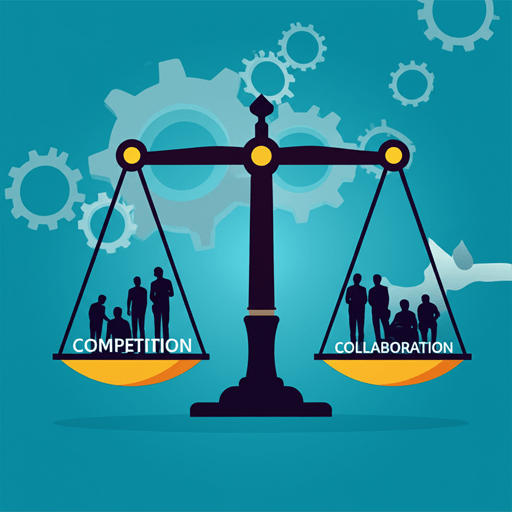
The cultural stance on teamwork often hinges on how goals and results are perceived. We all have a competitive side — evident in the popularity of sports, lotteries, and games. In certain cultures, this competitive nature dominates interactions. Negotiations often have clear winners and losers, and the concept of a win-win situation can be elusive. Rewards tend to be individual rather than team-based, and blame is often directed at individuals.

This competitive approach can have downsides: feelings of failure, loss of self-confidence for the “losers,” and inflated egos for the “winners.” It can also stifle productivity and creativity within teams. However, competition can push individuals to achieve more than they thought possible.

Conversely, some cultures prioritise collaboration. Here, people work together to achieve goals, and rewards are shared at the team level. No individual is singled out for praise or blame. Collaboration can boost productivity and innovation and lead to more successful negotiations. These cultures focus on group well-being, harmony, and nurturing everyone, not just the “winners.”

While collaboration sounds positive, it has its challenges. It can increase social pressure and lead to burnout if not managed carefully. Group decision-making often means more meetings and communication, which can be time-consuming.

Neither approach is inherently better. Each has its advantages and drawbacks. As project managers, when you find yourself in a team with different cultural norms, adaptation is key. If you’re competitive, you might need to adjust to a lack of individual recognition. If you’re collaborative, you may need to embrace personal recognition in a competitive environment.

Adapting to a new culture often involves reassessing your values and assumptions. It’s a challenging process, but essential for success in diverse team settings. Understanding these dynamics can help project managers build more effective and harmonious teams, ultimately leading to successful project delivery.

Navigating Hierarchies in Project Management: A Guide for Project Managers

This article was originally published at: https://medium.com/@nadegeminois/understanding-fairness-in-project-management-54e6932eb9de

Understanding and adapting to different organisational hierarchies is crucial.

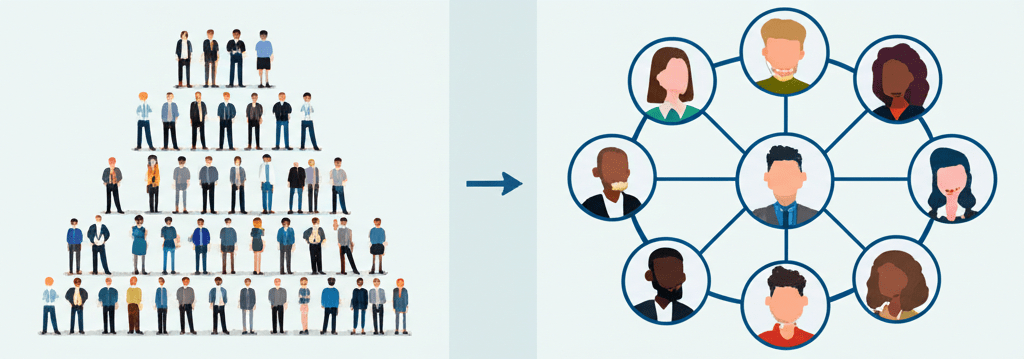
Some organisations operate with a well-defined hierarchy, where decision-making is the prerogative of those at the top. In such environments, respect is often tied to social status, connections, age, and gender. Leaders in these settings are expected to shoulder responsibilities that support their teams, while also commanding the respect they believe is due.

Conversely, there are organisations with flatter hierarchies, where equality is emphasised. Here, decisions are made collectively, and everyone in the group participates in the decision-making process. Status is earned through recent achievements, and individuals are encouraged to take initiative and delegate tasks freely.

The contrast between these two organisational structures is often stark. In more egalitarian organisations, management tends to be more diverse compared to their hierarchical counterparts.

Regardless of personal preference for hierarchy or equality, project managers must adapt to the prevailing culture of the organisation they are working with, unless they possess the authority to instigate change.

Adapting behaviourally to different hierarchies is not inherently difficult, but personal preferences are deeply rooted in values and beliefs. For instance, those who favour clear hierarchies may express respect through deference, while those who value equality may demonstrate respect through collaboration and inclusivity.

Having worked across various countries and organisations, I understand the importance of aligning with local expectations, whether as a leader or a team member. Acting in an egalitarian manner in a hierarchical setting may be perceived as indecisiveness, while seeking to participate in decision-making without invitation in a hierarchical environment may be seen as overstepping boundaries.

Open discussions can help clarify expectations, but changing ingrained views on hierarchy takes time. However, it is not an insurmountable challenge. Many leaders who once adhered to authoritarian styles have learned to embrace inclusivity, recognising the benefits of incorporating diverse ideas from their teams.

In project management, the ability to navigate and adapt to different hierarchical structures is a valuable skill that can lead to more effective collaboration and project success.

Understanding Fairness in Project Management

This article was originally published at: https://medium.com/@nadegeminois/understanding-fairness-in-project-management-54e6932eb9de

In project management, understanding the cultural nuances of fairness can be pivotal. All societies and cultures have their own set of rules and laws, but the adherence to these can vary significantly.

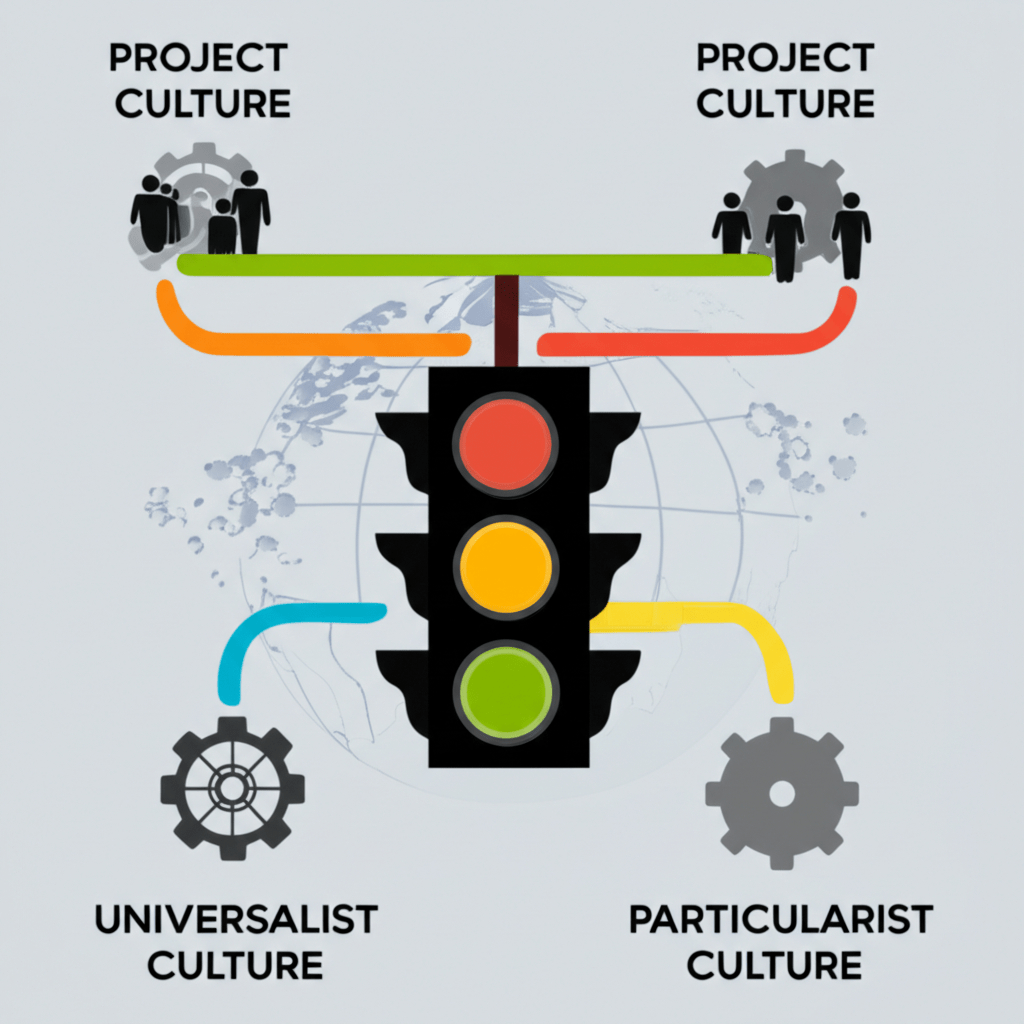
On one hand, we have universalist cultures, where rules and laws are applied uniformly to everyone. This “one size fits all” approach is straightforward and predictable. On the other hand, particularist cultures adapt the application of rules based on the context of the situation, allowing for flexibility and discretion.

Both approaches aim for fairness, yet the definition of fairness itself varies. In many Western cultures, fairness is often equated with treating everyone the same. However, in other cultures, fairness is seen as context-dependent, where the circumstances dictate the application of rules.

Consider this scenario often used to explore personal and cultural values: Imagine a close friend or family member has broken the law, resulting in harm to someone else, and you are the main witness. Would you uphold the law, potentially leading to punishment for your friend or family member, or would you stand by them? Would your decision change based on the specifics of the situation?

This distinction between universalist and particularist cultures can have significant implications in business, especially for project managers working in multinational environments. For instance, a company might develop a successful employee reward system in one location and decide to implement it globally. However, this approach will only succeed if all locations share the same concept of fairness. Otherwise, the system might be perceived as unfair and could even backfire in offices where cultural norms differ.

So, how can project managers navigate these cultural differences, especially when working in a new country or with a diverse team? First, assess your own cultural preferences. Then, evaluate where your colleagues or stakeholders fall on the universalist-particularist spectrum. Observe whether rules and policies are prominently followed or not. Like waiting for the green light to cross the street. These observations can provide insights into the cultural context.

If there is a gap between your preferences and those of others, adapting your behaviour and actions to align with local expectations is crucial. This can be challenging, as cultural norms often influence our perceptions of right and wrong, good and bad. It’s essential to set aside personal judgments and understand that these concepts are relative rather than absolute.

Time Management Across Cultures: Strategies for Project Managers

This article was originally published at: https://medium.com/@nadegeminois/time-management-across-cultures-strategies-for-project-managers-93b9714025ec

Navigating cultural differences in time perception can be a complex challenge.

Imagine this scenario: a team member arrives 10 minutes late to a crucial meeting. Fifteen minutes into the discussion, she takes a phone call. Her colleague interrupts twice with pressing questions, and now she needs to step out to address another matter. With only 15 minutes remaining, the core agenda remains untouched, leaving you wondering how to proceed.

How would you react in this situation? Would you find it exasperating or simply part of the norm? Your response might depend significantly on your cultural understanding of time.

There are two primary cultural approaches to time: monochronic and polychronic.

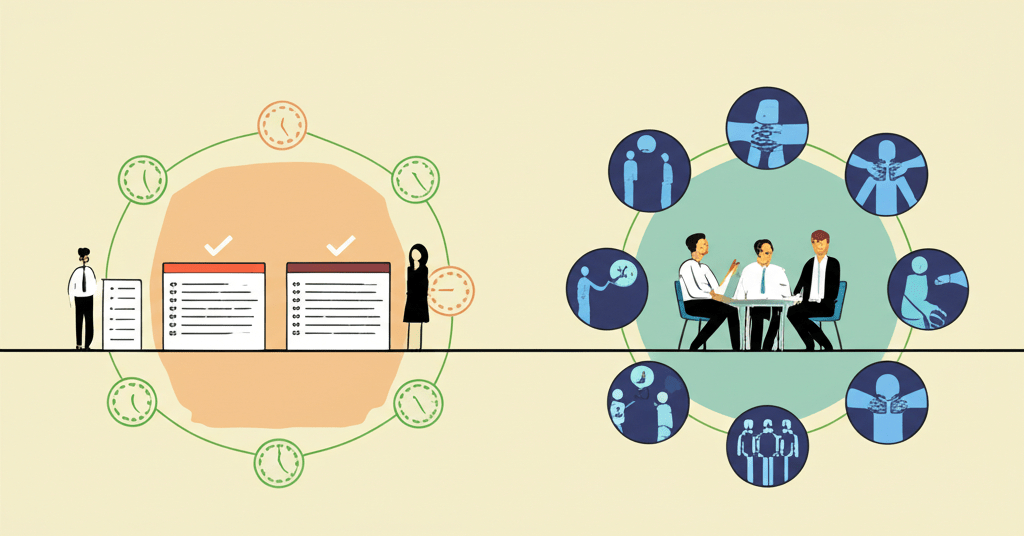
In monochronic cultures, time is viewed as a series of tasks to be completed in a linear sequence. Time is about doing. Meetings are expected to start punctually, adhere strictly to the agenda, and participants are focused on the task at hand. Tardiness is typically met with apologies, as time is seen as finite and linear. Cultures such as North America, Northern Europe, and some parts of Asia exemplify this structured and disciplined view of time. In these cultures, time is a resource to be managed carefully, and any deviation from the schedule can be seen as a disruption.

On the other hand, polychronic cultures, such as those found in South America, the Middle East, and Southern Europe, perceive time more fluidly. Here, time is about what you’re doing at the moment rather than adhering strictly to schedules. Priorities shift based on what is deemed important at the time, and time is a tool for building and nurturing relationships. It’s not about multitasking per se, but rather a flexible approach to switching between tasks. What might be seen as distractions in monochronic cultures are simply part of the natural flow in polychronic settings. In these cultures, the emphasis is on human interaction and the quality of relationships, rather than rigid adherence to timeframes.

So, as a project manager, how do you navigate these cultural differences in time perception? Understanding and respecting these cultural nuances is crucial. It involves being adaptable and finding a balance between maintaining project timelines and accommodating the cultural practices of your team members. By fostering open communication and setting clear expectations, you can bridge the gap between different time perceptions and ensure successful project delivery. Embracing cultural diversity in time management can lead to more harmonious and effective teamwork, ultimately driving project success.

Understanding Time Perception in Project Management: A Cultural Perspective

This article was originally published at: https://medium.com/@nadegeminois/9da920da08ca

In project management, time is often viewed as a critical resource. However, how we perceive and relate to time is deeply influenced by cultural norms, which can significantly impact how we plan our days and manage relationships with stakeholders. As project managers, understanding these cultural differences in time perception can enhance our ability to navigate complex projects and foster smoother interactions with diverse teams.

The Cultural Lens on Time

Have you ever found yourself frustrated when meetings start late, deviate from the agenda, or run over time? Do missed intermediate deadlines and milestones cause you stress? It’s important to recognise that these behaviours, while potentially disruptive in some contexts, may be perfectly normal and even expected in others.

There are two predominant cultural perspectives on time: linear and cyclical. Understanding these can help project managers better align their strategies with the cultural expectations of their teams and stakeholders.

Linear Time Perception

In many Western cultures, time is perceived as a linear process. It is seen as a finite resource that moves in one direction—forward. This perspective emphasises efficiency and productivity, with time being something that can be “spent,” “saved,” or “wasted.” The language we use reflects this view, with phrases like “time flies” or “running out of time” being commonplace.

For project managers operating within this framework, time management is often about creating and adhering to schedules, setting clear deadlines, and minimising procrastination. Tools like to-do lists and Gantt charts are staples in this approach, helping to ensure that tasks are completed in a timely manner. This perspective aligns with the structured methodologies often employed in project management, such as Waterfall or PRINCE2, where timelines and milestones are clearly defined.

Cyclical Time Perception

Conversely, in many Asian and Middle Eastern cultures, time is viewed as cyclical. Here, time is seen as abundant rather than scarce. This perspective encourages individuals to take their time, focusing on the present moment and the quality of interactions rather than the quantity of tasks completed. Relationships and being present for others take precedence over strict adherence to schedules.

For project managers working with teams that hold this view, flexibility and adaptability become key. The focus shifts from rigid timelines to fostering strong relationships and ensuring that team members feel valued and heard. Agile methodologies, which emphasise more collaboration and adaptability, can be particularly effective in these environments.

Bridging the Gap

Neither perspective on time is inherently superior; they are simply different. However, when these differences are not acknowledged, they can lead to misunderstandings and frustration. For instance, a project manager with a linear view of time may feel exasperated by a team member who appears unhurried and unconcerned with deadlines. Conversely, a team member with a cyclical view may perceive a linear-focused manager as overly demanding or inflexible.

As project managers, it is crucial to recognise where you and your team members fall on this spectrum. By understanding these cultural nuances, you can better tailor your communication and management style to accommodate different time perceptions. This might involve incorporating more flexibility into your project plans or placing greater emphasis on relationship-building activities.

Conclusion

In project management, cultural awareness is a powerful tool. By understanding and respecting different perceptions of time, project managers can create more inclusive and effective environments. This not only enhances project outcomes but also strengthens the relationships that are vital to long-term success. So, next time you find yourself in a cross-cultural project setting, take a moment to consider how time is perceived and use this insight to bridge gaps and build stronger, more cohesive teams.

From Detail to Big Picture: Adapting Thinking Styles in Project Management

This article was originally published at: https://medium.com/@nadegeminois/9da920da08ca

Cultural influences can significantly shape our approach to problem-solving. One key aspect is whether we prefer to break down complex tasks into smaller, manageable parts or whether we adopt a systemic view, considering the entire picture. Both methods have their merits and drawbacks.

In Western cultures, there’s a strong emphasis on analytical thinking. From a young age, we’re taught to dissect large problems into smaller tasks. This approach is a cornerstone of many problem-solving techniques, as it makes challenges seem less daunting and more manageable. However, this method can sometimes lead to overlooking the broader impact of individual tasks.

For instance, in a project setting, focusing too narrowly on a single task might cause us to miss how it affects the overall project objectives, potentially leading us off course. Consider a project manager overseeing a software development project. If they focus solely on coding a specific feature without considering its integration with the entire system, they might encounter unforeseen issues that disrupt the project’s flow.

This is akin to introducing a predator to control an invasive species without considering the broader ecological impact, which can lead to unintended consequences.

Conversely, many Asian cultures, among others, tend to adopt a holistic perspective. This approach ensures that the end goal remains in sight, allowing for a comprehensive understanding of the project’s impact. However, it can also make the task seem overwhelming, as it may be challenging to identify where to start or how to prioritise actions.

In the context of project management, this means evaluating all potential actions and their global consequences. While this is beneficial, it can also lead to difficulties in prioritising tasks. For example, a project manager might struggle to decide which stakeholder’s needs to address first when considering the entire project’s ecosystem.

The good news is that cultural tendencies don’t confine us to one way of thinking. We can learn to adapt our approach based on the context. A successful project manager should be adept at both analytical and systemic thinking. Analytical skills are crucial for planning and executing tasks, while systemic thinking ensures that the project aligns with the broader organisational goals.

In summary, project managers should strive to balance these approaches, adapting their thinking to suit the project’s needs. By doing so, they can navigate complex stakeholder dynamics and ensure successful project delivery.

Understanding Formality in Project Management Communication

This article was originally published at: https://medium.com/@nadegeminois/understanding-formality-in-project-management-communication-0fe9a8156d45

In the realm of project management, the way we communicate can significantly impact our relationships with stakeholders and team members. Consider the difference between a casual “Hi mate, what’s up?” and a more formal “Good afternoon Professor Martin, I hope it is okay to ask you a question?” These expressions highlight varying levels of formality, which are often influenced by cultural norms.

Cultural Influences on Formality

The level of formality in communication is largely dictated by cultural context. In English-speaking countries, where “you” is universally used, interactions tend to be more informal. Conversely, in cultures with distinct formal and informal address forms, communication is generally more formal, requiring careful consideration of how we address others.

For instance, in the United States and the UK, it’s common for people to address each other by first names, even if they are not acquainted. However, during my time in Germany and Austria, I noticed a preference for using titles and last names in initial interactions. Similarly, in France, where I grew up, it was customary to use the polite form and last name, especially when addressing someone unfamiliar or of higher status.

Beyond Words: The Many Facets of Formality

Formality extends beyond the words we choose. It encompasses how we convey our messages. Eye contact, physical proximity, and body language all play a role in determining the level of formality. For example, how close you stand to someone or how you sit during a conversation can signal your level of formality.

Even attire can reflect formality. Is it appropriate to wear jeans and a sweater when meeting with your boss? These considerations are crucial in maintaining the right level of formality in professional settings.

The Complexity of Formality in Communication

While formality might seem straightforward, it manifests in various aspects of behaviour and communication. Ensuring the appropriate level of formality, especially when interacting with unfamiliar individuals or those from different cultures, can be challenging.

Failing to match the expected formality level can have serious repercussions. It might result in losing the trust of a stakeholder. As project managers, understanding and adapting to these nuances is essential for successful stakeholder engagement and project delivery.

Mastering Project Management: A Conversation with Nadege Minois

This is an article written by Bhavana Tadiboina, based on an interview I had with her.

The article was originally published on Bhavana’s blog at https://tadiboinabhavana.wixsite.com/bhavana-tadiboina/post/mastering-project-management-a-conversation-with-nadege-minois

Project management is often portrayed as a world of frameworks, methodologies, and structured plans. But as anyone in the field knows, real-world projects rarely go according to plan. I had the pleasure of speaking with Nadege Minois, a Project Management Specialist with a background in biology, who transitioned into managing IT and research projects before founding Coaching Vision— a consultancy dedicated to helping project managers improve communication and stakeholder engagement.

Her journey, insights, and candid reflections on the reality of project management were eye-opening. If you’re a student or an aspiring project manager struggling to break into the field, this conversation is packed with wisdom you don’t want to miss.

From Scientist to Project Manager: A Leap of Faith

Nadege’s transition into project management wasn’t something she meticulously planned. In fact, uncertainty led her there. While managing research projects, she realized she enjoyed the process of coordinating teams and ensuring everything ran smoothly. When faced with the need for a career change, she took a leap—despite not having formal project management training at the time.

This resonates with many of us. Often, we think we need to have every qualification before stepping into a role. But Nadege’s story proves that real-world experience, curiosity, and adaptability can be just as valuable as certifications.

The Myth of the Perfect Plan

If you’ve ever studied project management, you know the importance of planning. But here’s the reality: plans rarely go as expected.

According to Nadege, most projects don’t allow the luxury of detailed, upfront planning. “People are so eager to see results that they skip over the planning phase,” she shared. And even when you do plan, things change. The ability to adapt is what sets a great project manager apart.

Another major misconception? Communication. Project management isn’t just about holding meetings—it’s about making those meetings effective. Many PM courses teach stakeholder engagement but don’t dive into the nuances of real communication: handling resistance, managing conflicts, and ensuring everyone feels heard.

Dealing with “Difficult” Stakeholders

One of the biggest challenges in project management is stakeholder management—especially when you have people who resist change or seem impossible to please.

Nadege’s approach? Shift your mindset.

“Instead of seeing someone as a difficult stakeholder, ask yourself—why are they resisting? What are they afraid of? What do they see that you don’t?” She emphasized that most resistance comes from fear, misunderstanding, or lack of clarity.

When you take the time to listen and understand their concerns, you might discover they actually have valuable insights that could improve the project.

What Defines Project Success?

It’s not just about meeting deadlines. According to Nadege, a successful project is determined by three factors:

1️⃣ Delivering True Value – Does the project fulfill its intended purpose? Does it solve the right problem?

2️⃣ The Experience of the Team & Stakeholders – Would they willingly work with you again on another project?

3️⃣ Lessons Learned – Did the project leave insights that improve future projects?

The Biggest Lessons & Mistakes in Project Management

Even experienced PMs make mistakes, and Nadege was candid about hers.

One of the biggest? Trying to do everything.

“As a new project manager, I found myself acting as a business analyst, tester, problem-solver—everything except focusing on leading the project,” she admitted. “But a PM’s role is to orchestrate, not do it all.”

Another mistake? Following the textbook too rigidly. While methodologies are important, practical experience and adaptability matter more than blindly following a process.

Breaking Into Project Management Without Experience

One of the biggest hurdles for aspiring PMs is gaining experience without already having a PM job. Nadege’s advice?

✅ Volunteer – Find organizations that need help managing projects.

✅ Create Your Own Project – Gather a team, set a goal, and run it like a real project.

✅ Leverage Past Experience – Many jobs involve project-like work; frame your experience in a way that highlights your PM skills.

✅ Keep Learning & Networking – Engage with the PM community, seek mentors, and never stop refining your skills.

The Future of Project Management

According to Nadege, the biggest shift in project management is moving from task management to leadership.

“Project managers today need more than technical skills—they need to be leaders, strategists, and communicators,” she explained. AI and automation will also play a role, but they won’t replace PMs. Instead, they’ll serve as powerful tools to streamline processes and decision-making.

However, the core of project management will remain human-centric. Emotional intelligence, adaptability, and strong leadership will be the defining factors of great project managers.

Final Thoughts

Project management is challenging, dynamic, and constantly evolving. But as Nadege highlighted, it’s also one of the most rewarding careers—one where you can drive real change, help teams grow, and deliver meaningful impact.

For those struggling to break into the field, her advice is clear: start where you are, seek opportunities to apply your skills, and focus on mastering communication and leadership.

If you’re an aspiring project manager, what’s your biggest challenge right now? Drop a comment—I’d love to hear your thoughts!

Adapting to Cultural Dynamics: Enhancing Project Management Success

This post was originally published at: https://medium.com/@nadegeminois/adapting-to-cultural-dynamics-enhancing-project-management-success-9af13c8b6cab

In this new series of posts, I will delve into the cultural differences that project managers often encounter when they work with diverse team members. Based on research into cultural variations, this series will focus on how these differences impact relationships and interactions within project management.

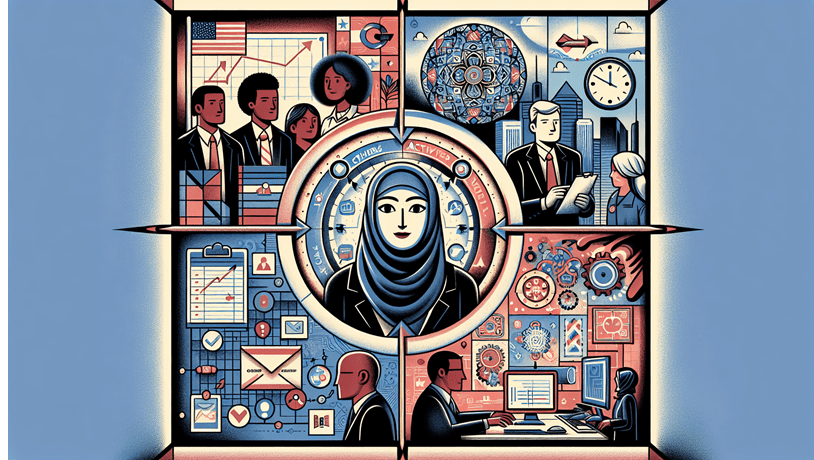
Research has categorised our interactions into four main areas: others, activities, time, and environment. As a project manager, you may find yourself grappling with one or more of these areas at different stages of your career. Perhaps you’re facing challenges in stakeholder relationships, managing tasks that don’t align with your strengths, feeling the pressure of tight deadlines, or struggling to connect with the broader organisational environment.

For project managers working in international or cross-cultural settings, these challenges can be even more pronounced. Adapting to this extra project environment means adjusting your approach in all four areas simultaneously, which can be daunting.

In this series, I will explore each category in detail, providing insights into how you can navigate cultural differences to enhance your project management skills. Understanding these components will enable you to perform more effectively in diverse cultural settings.

Cultures and individuals vary significantly in their approach to others, activities, time, and environment. For example, communication styles can differ in terms of directness, formality, and non-verbal cues. Attitudes towards time can be more linear or cyclical, and relationships with our environment can range from control to harmony. Additionally, cultures may lean towards individualism or collectivism.

These are just a few examples of how cultural traits can differ. In the upcoming posts, I will categorise these cultural differences, explaining their implications and how they can lead to misunderstandings if not properly managed. By understanding and integrating these cultural components, project managers can avoid miscommunication and leverage the strengths of diverse teams.

Cultural differences are not binary; they exist on a continuum. As project managers, our ability to adapt and move along this continuum is crucial. This flexibility determines our capacity to integrate and leverage cultural differences effectively.

If you find yourself resonating with any of the challenges described, feel free to reach out. You might be experiencing a form of culture shock that is affecting your professional performance. My expertise lies in helping project managers navigate these situations to achieve their best results.

Unlocking Project Success: The Power of Technical Agility

This article was originally published at: https://medium.com/@nadegeminois/unlocking-project-success-the-power-of-technical-agility-084e70c0633d

The ability to adapt and leverage technology effectively is a crucial trait that sets successful project managers apart. This trait, known as technical agility, is not about being an IT expert or having deep industry-specific technical knowledge. Instead, it is about the ability to identify, adopt, and utilise the right tools and technologies to enhance project efficiency and effectiveness.

The Essence of Technical Agility

Technical agility is the capacity to navigate the ever-evolving landscape of project management tools and technologies. It involves understanding which tools are best suited for specific tasks and how they can be integrated into the project workflow to streamline processes and improve outcomes. This agility is not limited to traditional project management tools but extends to communication platforms, collaboration software, and even emerging technologies like Artificial Intelligence (AI).

The Role of Organisation in Technical Agility

Organisation is a fundamental aspect of technical agility. A well-organised project manager can effectively manage multiple tasks, deadlines, and stakeholders. However, organisation goes beyond maintaining a tidy workspace or a detailed to-do list. It involves strategically selecting and implementing tools that enhance organisational efficiency.

For instance, project management software like Trello, Asana, or Microsoft Project can help project managers keep track of tasks, deadlines, and team responsibilities. These tools provide a centralised platform for project planning, execution, and monitoring, ensuring that all team members are aligned and informed.

Choosing the Right Tools

One of the key components of technical agility is the ability to choose the right tools for the job. This requires a deep understanding of the project’s needs and the available technological solutions. Project managers must evaluate various tools based on their features, ease of use, integration capabilities, and cost-effectiveness.

For example, communication tools like Slack or Microsoft Teams can facilitate seamless collaboration among team members, regardless of their physical location. These platforms offer real-time messaging, video conferencing, and file sharing, enabling teams to stay connected and productive.

Similarly, data analysis tools like Tableau or Power BI can help project managers make informed decisions by providing insights into project performance and trends. By leveraging these tools, project managers can identify potential issues early and take corrective actions to keep the project on track.

The Impact of Artificial Intelligence

AI is a game-changer in the realm of project management. While technical agility encompasses a broad range of tools, AI deserves special mention due to its transformative potential. AI-powered tools can automate routine tasks, analyse large datasets, and provide predictive insights, freeing up project managers to focus on strategic decision-making.

For instance, AI can automate scheduling by analysing team members’ availability and workload, ensuring optimal resource allocation. It can also predict project risks by analysing historical data and identifying patterns that may indicate potential issues. By incorporating AI into their toolkit, project managers can enhance their technical agility and drive project success.

Developing Technical Agility

Developing technical agility requires a proactive approach to learning and adaptation. Project managers must stay abreast of the latest technological advancements and continuously evaluate their toolset to ensure it aligns with project goals. This involves attending industry conferences, participating in webinars, and engaging with professional networks to gain insights into emerging trends and best practices.

Moreover, project managers should foster a culture of innovation within their teams, encouraging team members to experiment with new tools and technologies. By creating an environment that values continuous improvement and learning, project managers can enhance their technical agility and drive project success.

Conclusion

Technical agility is a vital trait for project managers. It empowers them to navigate the complexities of modern project management, leveraging the right tools and technologies to enhance efficiency and effectiveness. By embracing technical agility, project managers can unlock new opportunities for innovation and drive project success in an ever-evolving landscape.

In summary, technical agility is not about being a tech guru but about being a strategic thinker who can harness the power of technology to achieve project goals. It is about being organised, choosing the right tools, and embracing the potential of AI to transform project management. By developing technical agility, project managers can position themselves as leaders in their field, ready to tackle the challenges of tomorrow with confidence and competence.