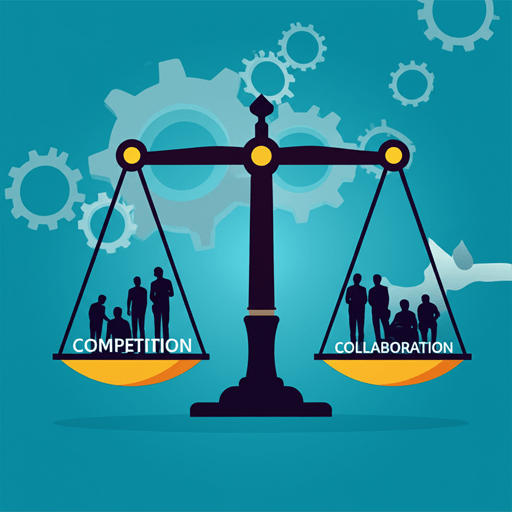
Balancing Competition and Collaboration: Insights for Project Managers

As project managers, we’re often reminded of the importance of being team players. It’s a staple in job interviews and a key criterion in job descriptions. But how does this ideal hold up in the real world of project management?

The answer varies across cultures. In some, teamwork is genuinely valued, while in others, it might be more of a façade.

The cultural stance on teamwork often hinges on how goals and results are perceived. We all have a competitive side — evident in the popularity of sports, lotteries, and games. In certain cultures, this competitive nature dominates interactions. Negotiations often have clear winners and losers, and the concept of a win-win situation can be elusive. Rewards tend to be individual rather than team-based, and blame is often directed at individuals.

This competitive approach can have downsides: feelings of failure, loss of self-confidence for the “losers,” and inflated egos for the “winners.” It can also stifle productivity and creativity within teams. However, competition can push individuals to achieve more than they thought possible.

Conversely, some cultures prioritise collaboration. Here, people work together to achieve goals, and rewards are shared at the team level. No individual is singled out for praise or blame. Collaboration can boost productivity and innovation and lead to more successful negotiations. These cultures focus on group well-being, harmony, and nurturing everyone, not just the “winners.”

While collaboration sounds positive, it has its challenges. It can increase social pressure and lead to burnout if not managed carefully. Group decision-making often means more meetings and communication, which can be time-consuming.

Neither approach is inherently better. Each has its advantages and drawbacks. As project managers, when you find yourself in a team with different cultural norms, adaptation is key. If you’re competitive, you might need to adjust to a lack of individual recognition. If you’re collaborative, you may need to embrace personal recognition in a competitive environment.

Adapting to a new culture often involves reassessing your values and assumptions. It’s a challenging process, but essential for success in diverse team settings. Understanding these dynamics can help project managers build more effective and harmonious teams, ultimately leading to successful project delivery.

Navigating the Complexities of High and Low Context Communication for Project Managers

This article was originally published at https://medium.com/@nadegeminois/navigating-the-complexities-of-high-and-low-context-communication-for-project-managers-05dfc56a3bf5

Let’s face it, understanding the nuances of communication across different cultural contexts can be quite challenging. The spectrum of communication styles, from low context to high context, presents a significant potential for misunderstandings and overlooked information.

So, what exactly are we dealing with here? This cultural orientation in communication is often described as low context versus high context.

In low context cultures, communication primarily serves to exchange information. The meaning is largely embedded in the words themselves. Individuals from low context cultures prefer clear, detailed instructions, comprehensive guidance, and formal procedures. They value written and signed agreements, taking everything at face value.

Conversely, in high context cultures, communication aims to build relationships. Words alone carry little weight. The true meaning is conveyed through non-verbal cues such as body language, gestures, facial expressions, and tone of voice. It’s about how something is said and the surrounding context. Without understanding the context, the words themselves hold little meaning.

From these descriptions, it’s easy to see how communication can falter. Imagine a low context individual focusing solely on words, missing the non-verbal cues of their high context counterpart. Or interpreting a “yes” as agreement when the context clearly indicates otherwise. Tricky, isn’t it?

Another layer of complexity is that context is inherently situational. Even individuals from high context cultures may have differing contexts, leading to misunderstandings. Consider a hand gesture that means one thing to you but something entirely different—or nothing at all—to someone else.

So, how can project managers reduce confusion and misunderstanding? First, observe and become aware of non-verbal communication. It may be challenging and time-consuming if you’re not accustomed to it. Second, pay attention to the outcomes of communication, especially when you’re not directly involved. This helps relate the meaning and outcome to the non-verbal cues you’ve observed. Third, avoid interpreting when you’re unsure. Without cultural context, your interpretation may be inaccurate. Fourth, accept that you may miss or misinterpret some information. If results aren’t as expected, seek clarification to understand where the meaning was lost.

Fully grasping all the intricacies of a high context culture may be beyond reach within a limited timeframe. However, with practice and awareness, improvement is inevitable. When transitioning from a high context to a low context culture, remember that others may miss the nuances of your non-verbal communication. Don’t be surprised by misunderstandings and try to convey more information through words.

Whatever the situation, engaging with someone from the opposite end of this continuum will undoubtedly lead to intriguing conversations.

Navigating Emotional Expression in Project Management Across Cultures

This article was originally published at: https://medium.com/@nadegeminois/navigating-emotional-expression-in-project-management-across-cultures-e698f5055599

As project managers, we often find ourselves in diverse environments where understanding cultural nuances is key to successful collaboration. One such nuance is the expression of emotions, which varies significantly across cultures and can impact team dynamics and project outcomes.

In many cultures, particularly in Northern Europe, the professional norm is to maintain a composed demeanor. Emotions are kept in check, and enthusiasm is often tempered, even in the face of success. This restraint can be even more pronounced in some Asian cultures, where emotional expression in the workplace is minimal. Here, professionalism is often equated with emotional restraint, and showing too much emotion can be seen as a lack of control or maturity.

Conversely, in Southern European cultures, emotions are integral to communication and decision-making. Here, expressing feelings is seen as a natural part of interaction, and a lack of emotional expression might be perceived as aloofness or insincerity. In these cultures, emotions are not just personal but are considered a vital part of the professional landscape, influencing decisions and interactions. This approach can foster a sense of closeness and trust among team members, as emotions are viewed as an authentic expression of one’s thoughts and intentions.

When project team members from these contrasting cultural backgrounds collaborate, misunderstandings can arise. One might perceive the other as distant and untrustworthy, while the other might view their counterpart as overly emotional or unprofessional. These perceptions can lead to friction and hinder effective communication, ultimately affecting project success.

Adapting to these differences is not straightforward. For those accustomed to emotional restraint, expressing feelings might feel unnatural or forced. On the other hand, those who are used to being expressive might struggle to suppress their emotions, leading to internal frustration. This internal conflict can affect one’s ability to engage fully with the team and contribute effectively to the project.

To bridge this cultural gap, project managers can take proactive steps:

  1. Find a Balance: If you tend to be reserved, try to express your emotions a bit more. Conversely, if you’re naturally expressive, consider moderating your emotional displays. This balance can help in creating a more harmonious work environment. By adjusting your emotional expression, you can better align with your team’s cultural expectations, fostering mutual respect and understanding.
  2. Open Dialogue: Engage in open discussions with your team about emotional expression. Acknowledge and respect each other’s cultural attitudes towards emotions. Avoid interpreting actions through your cultural lens, as this can lead to misjudgments. By discussing these differences openly, you can develop a shared understanding and create a more inclusive team culture.
  3. Cultural Sensitivity Training: Consider implementing cultural sensitivity training for your team. This can provide valuable insights into different cultural norms and help team members develop empathy and understanding for each other’s perspectives. Such training can enhance team cohesion and improve overall project performance.

By understanding and respecting these cultural differences, project managers can foster a more inclusive and effective team environment, ultimately leading to better project outcomes. Embracing cultural diversity in emotional expression not only enriches the team dynamic but also enhances the creativity and innovation that arise from diverse perspectives.

Adaptable Communication: The Sailing through Effective Project Management

Image by pencil parker from Pixabay

This article was originally published at: https://medium.com/@nadegeminois/adaptable-communication-the-sailing-through-effective-project-management-84867ed3bd07

One word encapsulates the environment of project management: diversity. This diversity is not only in tasks and activities but also in the people involved. From team members to end users, regulatory bodies to audit committees, the range of stakeholders a project manager must engage with is vast and varied. Each group requires different information, delivered in a manner that resonates with them. This is where the art of adaptable communication becomes indispensable.

Understanding the Audience

The first step in adaptable communication is understanding your audience. Each stakeholder group has unique needs, expectations, and communication preferences. For instance, while team members may require detailed daily updates, executive stakeholders might prefer high-level summaries. Regulatory bodies may need precise compliance information, whereas end users might be more interested in how the project benefits them. Recognising these differences is crucial for effective communication.

Tailoring the Message

Once you understand your audience, the next step is tailoring your message. This involves not only the content but also the delivery method. Some stakeholders might prefer written reports, while others might respond better to visual presentations or face-to-face meetings. The key is to convey meaningful and impactful messages that ensure clarity about the project and each stakeholder’s role in it. When stakeholders are clear about their roles, they are more likely to be engaged and contribute positively to the project.

Building Trust and Engagement

Adaptable communication is not just about delivering information; it’s about building trust and engagement. When stakeholders feel that their needs and preferences are understood and respected, they are more likely to trust the project manager and the project itself. This trust fosters a collaborative environment where stakeholders are more willing to share insights, provide feedback, and support the project’s objectives.

Overcoming Communication Barriers

In any project, communication barriers are inevitable. These can arise from cultural differences, language barriers, or even differing levels of technical understanding. An adaptable communicator anticipates these challenges and proactively addresses them. This might involve using simpler language, providing translations, or offering additional training sessions to ensure everyone is on the same page.

The Role of Technology

In today’s digital age, technology plays a significant role in adaptable communication. Project managers have access to a plethora of tools that can aid in tailoring communication. From project management software that offers real-time updates to video conferencing tools that facilitate virtual meetings, technology can bridge the gap between diverse stakeholder groups. However, it’s essential to choose the right tools that align with the stakeholders’ preferences and the project’s needs.

Continuous Improvement

Adaptable communication is not a one-time effort but a continuous process. As projects evolve, so do the needs and expectations of stakeholders. Regular feedback loops can help project managers refine their communication strategies. By actively seeking feedback and being open to change, project managers can ensure that their communication remains effective and relevant throughout the project lifecycle.

Conclusion

Adaptable communication is a vital trait for any project manager aiming for success. By understanding the diverse needs of stakeholders, tailoring messages accordingly, and leveraging technology, project managers can foster an environment of trust and engagement. This not only enhances the project’s chances of success but also transforms stakeholders into active allies, paving the way for smoother project delivery and greater overall satisfaction.