Understanding Time Perception in Project Management: A Cultural Perspective

This article was originally published at: https://medium.com/@nadegeminois/9da920da08ca

In project management, time is often viewed as a critical resource. However, how we perceive and relate to time is deeply influenced by cultural norms, which can significantly impact how we plan our days and manage relationships with stakeholders. As project managers, understanding these cultural differences in time perception can enhance our ability to navigate complex projects and foster smoother interactions with diverse teams.

The Cultural Lens on Time

Have you ever found yourself frustrated when meetings start late, deviate from the agenda, or run over time? Do missed intermediate deadlines and milestones cause you stress? It’s important to recognise that these behaviours, while potentially disruptive in some contexts, may be perfectly normal and even expected in others.

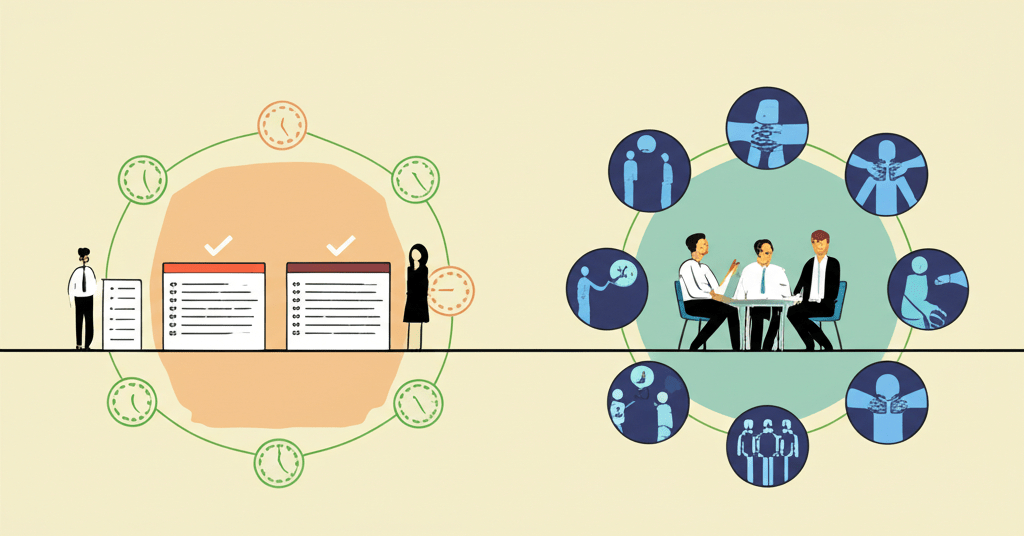
There are two predominant cultural perspectives on time: linear and cyclical. Understanding these can help project managers better align their strategies with the cultural expectations of their teams and stakeholders.

Linear Time Perception

In many Western cultures, time is perceived as a linear process. It is seen as a finite resource that moves in one direction—forward. This perspective emphasises efficiency and productivity, with time being something that can be “spent,” “saved,” or “wasted.” The language we use reflects this view, with phrases like “time flies” or “running out of time” being commonplace.

For project managers operating within this framework, time management is often about creating and adhering to schedules, setting clear deadlines, and minimising procrastination. Tools like to-do lists and Gantt charts are staples in this approach, helping to ensure that tasks are completed in a timely manner. This perspective aligns with the structured methodologies often employed in project management, such as Waterfall or PRINCE2, where timelines and milestones are clearly defined.

Cyclical Time Perception

Conversely, in many Asian and Middle Eastern cultures, time is viewed as cyclical. Here, time is seen as abundant rather than scarce. This perspective encourages individuals to take their time, focusing on the present moment and the quality of interactions rather than the quantity of tasks completed. Relationships and being present for others take precedence over strict adherence to schedules.

For project managers working with teams that hold this view, flexibility and adaptability become key. The focus shifts from rigid timelines to fostering strong relationships and ensuring that team members feel valued and heard. Agile methodologies, which emphasise more collaboration and adaptability, can be particularly effective in these environments.

Bridging the Gap

Neither perspective on time is inherently superior; they are simply different. However, when these differences are not acknowledged, they can lead to misunderstandings and frustration. For instance, a project manager with a linear view of time may feel exasperated by a team member who appears unhurried and unconcerned with deadlines. Conversely, a team member with a cyclical view may perceive a linear-focused manager as overly demanding or inflexible.

As project managers, it is crucial to recognise where you and your team members fall on this spectrum. By understanding these cultural nuances, you can better tailor your communication and management style to accommodate different time perceptions. This might involve incorporating more flexibility into your project plans or placing greater emphasis on relationship-building activities.

Conclusion

In project management, cultural awareness is a powerful tool. By understanding and respecting different perceptions of time, project managers can create more inclusive and effective environments. This not only enhances project outcomes but also strengthens the relationships that are vital to long-term success. So, next time you find yourself in a cross-cultural project setting, take a moment to consider how time is perceived and use this insight to bridge gaps and build stronger, more cohesive teams.

Unlocking Project Success: The Power of Technical Agility

This article was originally published at: https://medium.com/@nadegeminois/unlocking-project-success-the-power-of-technical-agility-084e70c0633d

The ability to adapt and leverage technology effectively is a crucial trait that sets successful project managers apart. This trait, known as technical agility, is not about being an IT expert or having deep industry-specific technical knowledge. Instead, it is about the ability to identify, adopt, and utilise the right tools and technologies to enhance project efficiency and effectiveness.

The Essence of Technical Agility

Technical agility is the capacity to navigate the ever-evolving landscape of project management tools and technologies. It involves understanding which tools are best suited for specific tasks and how they can be integrated into the project workflow to streamline processes and improve outcomes. This agility is not limited to traditional project management tools but extends to communication platforms, collaboration software, and even emerging technologies like Artificial Intelligence (AI).

The Role of Organisation in Technical Agility

Organisation is a fundamental aspect of technical agility. A well-organised project manager can effectively manage multiple tasks, deadlines, and stakeholders. However, organisation goes beyond maintaining a tidy workspace or a detailed to-do list. It involves strategically selecting and implementing tools that enhance organisational efficiency.

For instance, project management software like Trello, Asana, or Microsoft Project can help project managers keep track of tasks, deadlines, and team responsibilities. These tools provide a centralised platform for project planning, execution, and monitoring, ensuring that all team members are aligned and informed.

Choosing the Right Tools

One of the key components of technical agility is the ability to choose the right tools for the job. This requires a deep understanding of the project’s needs and the available technological solutions. Project managers must evaluate various tools based on their features, ease of use, integration capabilities, and cost-effectiveness.

For example, communication tools like Slack or Microsoft Teams can facilitate seamless collaboration among team members, regardless of their physical location. These platforms offer real-time messaging, video conferencing, and file sharing, enabling teams to stay connected and productive.

Similarly, data analysis tools like Tableau or Power BI can help project managers make informed decisions by providing insights into project performance and trends. By leveraging these tools, project managers can identify potential issues early and take corrective actions to keep the project on track.

The Impact of Artificial Intelligence

AI is a game-changer in the realm of project management. While technical agility encompasses a broad range of tools, AI deserves special mention due to its transformative potential. AI-powered tools can automate routine tasks, analyse large datasets, and provide predictive insights, freeing up project managers to focus on strategic decision-making.

For instance, AI can automate scheduling by analysing team members’ availability and workload, ensuring optimal resource allocation. It can also predict project risks by analysing historical data and identifying patterns that may indicate potential issues. By incorporating AI into their toolkit, project managers can enhance their technical agility and drive project success.

Developing Technical Agility

Developing technical agility requires a proactive approach to learning and adaptation. Project managers must stay abreast of the latest technological advancements and continuously evaluate their toolset to ensure it aligns with project goals. This involves attending industry conferences, participating in webinars, and engaging with professional networks to gain insights into emerging trends and best practices.

Moreover, project managers should foster a culture of innovation within their teams, encouraging team members to experiment with new tools and technologies. By creating an environment that values continuous improvement and learning, project managers can enhance their technical agility and drive project success.

Conclusion

Technical agility is a vital trait for project managers. It empowers them to navigate the complexities of modern project management, leveraging the right tools and technologies to enhance efficiency and effectiveness. By embracing technical agility, project managers can unlock new opportunities for innovation and drive project success in an ever-evolving landscape.

In summary, technical agility is not about being a tech guru but about being a strategic thinker who can harness the power of technology to achieve project goals. It is about being organised, choosing the right tools, and embracing the potential of AI to transform project management. By developing technical agility, project managers can position themselves as leaders in their field, ready to tackle the challenges of tomorrow with confidence and competence.

The Difference Communication Makes in Projects

This article was originally published on the Institute of Project Management website at https://instituteprojectmanagement.com/blog/the-difference-communication-makes-in-projects/

Introduction

Inefficient communication is the main reason why projects fail, i.e., are over budget and late and do not deliver what was initially expected. According to the PMI Pulse of the Profession 2023 report, communication is amongst the most critical power skills to acquire. According to the same report, organisations prioritising more power skills deliver their projects more successfully. In this article, I will explain the concrete difference that efficient communication makes in project delivery.

Two Scenarios: A Comparison

Here are two scenarios illustrating how communication affects project success:

1. Nivra’s Approach: Miscommunication Leads to Setbacks

Nivra is a project manager who implements an Enterprise Resource Planning (ERP) system for a big organisation. One morning, Nivra storms into the project team office and goes straight to Gus: “You were supposed to have done this by yesterday. I want it by tomorrow morning. I don’t care if you have to work on it the whole day and night. Get it done!”.

Gus never got a chance to explain the reasons for the non-delivery and that he wasn’t clear on the deadline. Later that day, Nivra got a message from the ERP supplier about a setback that would put the project off track. Nivra had known of this potentially happening as it was a risk the ERP supplier had raised, but Nivra did not tell other stakeholders about it and didn’t have a mitigation plan in place. Nivra did not want to “alert” the project sponsor and steering committee and hoped the risk would not materialise. At a meeting with some future users of the ERP system, some complained that the part shown did not do what they needed it to do. Nivra blamed the team member in charge of developing this part for not understanding the requirements.

2. Luvon’s Approach: Clear Communication Ensures Progress

Luvon knows the project is approaching a firm deadline. Arriving every morning in the office, Luvon asks the team members, “What do you need to make this deadline? Is progress as planned? Anything to clarify with a stakeholder?”.

Everyone shares their concerns and progress. Luvon regularly updates the key stakeholders on the progress until the deadline. Luvon is in regular contact with an external collaborator as they raised some concerns on their side regarding their ability to meet the deadline. Luvon raised the risk with the project sponsor and informed the sponsor and the steering committee on a regular basis. The project is ready to put a mitigation plan into action if the collaborator informs them they will not meet the deadline.

Are You More Like Nivra or Luvon?

What is happening in the projects in these two scenarios is similar. However, the way of handling it as a project manager is completely different. And it will have more than a significant impact on the project. How do you think team members and other stakeholders feel in each scenario? How much do you think they want to engage and are confident in the successful delivery of the project?

The Importance of Communication in Successful Projects

Successful projects are built on a strong communication foundation. Communication is what holds all parties together while delivering the project. The main goal of this communication is to get things done. After all, project management is results and tasks-driven. But it is people who run projects. So, as a project manager, look after the people, and they will look after the project!

What You Achieve with Efficient Project Communication

These are some examples of what efficient communication will bring to your projects.

  • Clear Objectives, Goals, Tasks and Deadlines: Team members know what to do, why they do it, how to do it and when to do it. Wider stakeholders know why you do what you do, what to expect and when.
  • Engaged Stakeholders: When you communicate relevant information at the right time to the right people, then stakeholders feel that they know what they need to know about the project. Furthermore, they know what’s in it for them and are more eager to contribute and engage with the project when it comes to championing it, testing the deliverables and embedding the project’s deliverables into their business-as-usual activities.
  • Better Risk Management: Most risks escalate into issues because of a lack of communication, which would have seen the risk becoming more likely to happen.
  • Better Team Collaboration and Efficiency: That sounds cliché, doesn’t it? But that’s the reality. Communication is the oil in the cogs of the team working.

What Needs to Underpin Communication

Communication in project management is not just about being a smooth operator (in a positive sense). Efficient communication needs to be underpinned by four values that should guide every communication and action in a project. I take these values as the most important when interacting with your team members and other stakeholders.

  • Respect: Everyone in the project has something to contribute. All voices need to be heard, all questions answered.
  • Trust: It will foster more open communication between stakeholders. Combined with respect, it will create an environment in which people can be open, make mistakes and share their ideas and thoughts about the project without fear.
  • Autonomy: As a project manager, you need to allow people to decide, and you need to delegate appropriately. Your role as a project manager is to get the best out of your team to deliver the project.
  • Integrity: As the project manager, you need to lead by example. If you do not show integrity in your words and actions, your team members and stakeholders will lose confidence and trust in you, your honesty and your reliability.

Now, let’s turn to what you can do concretely to make your project communication more efficient. Below are five areas that require your focus. Getting them right will go a long way towards efficient project communication.

Key Communication Strategies for Project Managers

  • Develop a Communication Plan: This is a given. Every project needs a detailed and tailored communication plan. It relies on thorough stakeholder identification. It contains the who, when, how, how often, and by whom of your communication within the project. It allows us to keep track of planned communication. However, this is only a first step. It is not because you have meetings in your plan that these meetings will be successful.
  • Use Technology Wisely: In an era in which we have access to so many tools, apps, and various technologies, it is easy to use them just for their own sake. Using many different tools to communicate is likely to confuse people interacting with the project. Consider the needs of the project and then assess which tools are best to fulfil these needs. Avoid using technology that is unsupported or not officially approved by your organisation. If you think the best technology is one not yet available to you via your organisation, make a case to get it and embed it in future projects.
  • Regular Updates: Schedule time to discuss progress, address issues or adjust plans as and when needed. These updates can be informal or set up meetings for them. Keep people informed. Your communication plan should reflect this effort for regular updates beyond project update reports.
  • Encourage Open Communication: Begin by being open to yourself. Share what is happening in the project, even the not-so-good news. Setbacks and issues always happen. Share them and ask stakeholders for help with them when necessary. If you are open, your team members and stakeholders will also open up more easily. This flow of communication will ensure everyone is clear on and engaged with the project.
  • Tailor Communication to Your Audience: Communication is not one size fits all. This is why having a communication plan in itself is not enough. The important aspect is how you turn the planned and unplanned interactions into impactful moments. You need to understand the communication needs and expectations of your stakeholders, depending on their roles in the projects and aspects such as their culture, circumstances, and so on. To achieve this, you first need to become aware of your own communication patterns and then understand others’ patterns to adapt your communication. The goal of communication is to be understood, and this is the responsibility of the person who sends the message. So, you need to “speak a language” that your interlocutors will understand.

Conclusion

By implementing these strategies and embracing the core values of respect, trust, autonomy, and integrity, you’ll be well on your way to improving communication in your projects. Strive to be more like Luvon — clear, open, and proactive in your communication, ensuring the success of your projects.

Now you can work on being more of a Luvon and less of a Nivra!

Reference Literature

Project Management Institute (PMI). 2023. “Pulse of the Profession 2023 — Power Skills, Redefining Project Success.”

Harvard Business Review (HBR). 2012. “The New Science of Building Great Teams.”

Why You Should Hire a Scientist for Hybrid Project Management

Article originally published at https://medium.com/@nadegeminois/why-you-should-hire-a-scientist-for-hybrid-project-management-dc809e97df81

When I switched from research in Biology to project management, I realised that, without knowing it, I had loads of experience in hybrid project management. Doing research is actually not very different from doing another type of project. Although you don’t call them the same, a scientist running and managing research projects uses a lot of techniques used in “formal” project management. A scientist can also bring highly valuable transferable skills as a project manager.

So, let me convince you that next time you hire a project manager, don’t sniff at the application from someone with a scientific background.

First, what’s the fuss with hybrid project management?

The ability to adapt project management methods becomes ever more crucial. Many companies now use hybrid project management, blending traditional and agile approaches to create a method tailored to each project’s unique demands. In short, it is a methodology spreading more in companies because of its adaptability to each organisation’s needs and culture.

While project managers with experience in different methodologies are valuable, a scientist as a project manager can be a game-changer. Scientists bring a unique blend of analytical skills, problem-solving abilities, and a rigorous approach to data that can significantly enhance the effectiveness of hybrid project management. Here’s why hiring a scientist can help make your hybrid project management approach more innovative, accurate, and resilient.

But before looking at these skills, let’s analyse the life cycle of a research project. I focus here on projects in “hard” sciences as they are sometimes called, because this is what I know best.

How a research project evolves

As any project, a research project begins with a question, an idea, a need. Then, as any project, you need money to carry the project out. And when you add salaries, costs of fancy equipment, consumables and everything else, it can come to a hefty amount of money!

And at this stage, it is all predictive project management. Because this is what you need to do when you apply for money to a funding body. You need to have everything planned for the whole length of the project: everything you will need, what you will do, when, who will do it (at least position and experience level if not specific names). And of course, you need to explain the expected results.

But it isn’t just about scope, resource and schedule. It is also about risks, benefits, impact as they sometimes like to call it and how the project fits in the overall field. In short, you also need to have the equivalent of the whole business documents you would prepare at the start of a project, even before formally initiating a project.

And let’s not forget communication! When you prepare a grant proposal, you need to detail the meetings you will have with your collaborators, the conferences you plan to present your results to, the articles you plan to write and outreach events to talk about your research and its importance to general audiences.

But from then on, once you have the money, it becomes all agile!

The cost is fixed: you cannot get more money for the same project. The time is fixed: your grant may be for a year, 3 years, 5 years or however long. This is the amount of time during which you will receive the money you got. The quality is fixed, because you want to publish your results in the best journals, to get more recognition and money for future projects.

So, in a very agile way, what will differ from your original plan is what you deliver. You will have of course your Minimum Viable Product, the least your project needs to deliver to be of the quality and scope required. However, exactly, how you deliver it, when, will vary. There are also peculiarities of science that makes any project uncertain and thus more agile. Techniques evolve quickly and a new, better technique, to measure what you wanted to measure has been developed. It is like taking an new opportunity in any project. Then, more specific to science, is that you cannot always predict the results of your experiments. So, it may happen that your project ends up in a different direction. This would be like finding a different way of providing greater value with your project.

For instance, this latter aspect happened to me both in my Masters and my PhD. I did not get the results we first expected from our hypothesis. This led me onto a new path, a new avenue of research, which at the end led to results that had greater value to the field.

I hope you can see in this description how scientists master both the more rigid structure of the predictive approach and the flexibility of agile methodologies.

Now, let’s look at individual characteristics that scientists get from their education and training. I will look here at 6 characteristics particularly suited for switching to project management. (A disclaimer here: the remainder of the article have been first drafted with the help of AI, unlike what appeared before).

1. Scientists Thrive in Complex Environments

One of the most notable strengths scientists bring is their ability to navigate and make sense of complexity. In research, scientists often tackle intricate, multifaceted problems that require a high tolerance for uncertainty. Hybrid project management similarly deals with diverse, evolving requirements, needing adaptive thinking and creative problem-solving. For example, managing a project with both agile and waterfall components may require complex coordination between teams operating under different principles. A scientist, accustomed to handling complexity, can bring methods and insights that facilitate clear decision-making amidst these dynamics.

2. Strong Analytical and Data-Driven Approach

Scientists are trained to rely on evidence, systematically testing hypotheses and analysing results. This approach translates well to hybrid project management, where balancing traditional metrics with agile flexibility can be challenging. By hiring a scientist, you bring on board someone skilled at data collection, analysis, and interpretation. Scientists are equipped to establish meaningful performance metrics, assess risks, and provide insights on progress. Their capacity for data-driven evaluation can make hybrid projects more transparent and better structured, as they can quickly identify trends, inefficiencies, or potential issues based on data analysis.

3. Effective Problem Solvers

Problem-solving is at the core of scientific work. Scientists are accustomed to dealing with challenges that don’t have obvious solutions and are skilled at developing innovative approaches to overcome them. In hybrid project management, unexpected problems are often a reality. A scientist’s problem-solving approach is methodical, systematic, and creative, which can be instrumental in developing solutions that bridge the gap between agile and traditional project requirements. For example, if a project encounters resource bottlenecks, a scientist can break down the problem, test potential solutions, and recommend an evidence-based approach that minimises disruption and optimises workflow.

4. Familiarity with Technological Tools and Research Methods

Today’s scientists work with a wide range of technological tools, including data analysis software, project modelling, and simulation tools. This technological know-how is invaluable in hybrid project management, where tools are often needed to manage various project stages, track progress, and analyse performance. Furthermore, scientists are familiar with rigorous research methods, allowing them to evaluate new project management tools, techniques, or practices objectively. They can introduce tools that add value to the project, helping teams improve efficiency and effectiveness.

5. Unique Perspective and Fresh Ideas

Because scientists come from a background of discovery and innovation, they can offer perspectives that are often different from those of traditional project managers. Their diverse knowledge base can inspire creative solutions, enabling the project team to view challenges from new angles. Scientists are also used to working in cross-disciplinary environments, where collaboration and open communication are essential. This background allows them to bridge gaps between traditional and agile teams, fostering an environment where innovation and structure coexist harmoniously.

6. Emphasis on Continuous Learning and Adaptation

Scientists are trained to be lifelong learners, continually seeking new information and adapting to advancements in their fields. This mindset aligns well with the iterative nature of hybrid project management, where adaptability and continuous improvement are crucial. By hiring a scientist, you bring in someone who is not only open to learning new project management techniques but also eager to apply insights from ongoing research. This emphasis on learning allows your team to stay updated with best practices and makes your project management approach more adaptable and resilient over time.

Conclusion

Hybrid project management is a versatile approach, but it requires a unique skill set that combines traditional planning with agile responsiveness. A scientist can complement the project team with their analytical mindset, problem-solving skills, and adaptability. They bring a fresh perspective, are highly data-driven, and have an innate ability to manage complex, evolving situations. In a landscape where projects demand agility, precision, and creativity, hiring a scientist can give your organisation a competitive edge. By leveraging their skills, you can make your hybrid project management approach more effective, innovative, and prepared for the challenges of the modern business environment.