
This article was originally published at: https://medium.com/@nadegeminois/understanding-fairness-in-project-management-54e6932eb9de
In project management, understanding the cultural nuances of fairness can be pivotal. All societies and cultures have their own set of rules and laws, but the adherence to these can vary significantly.
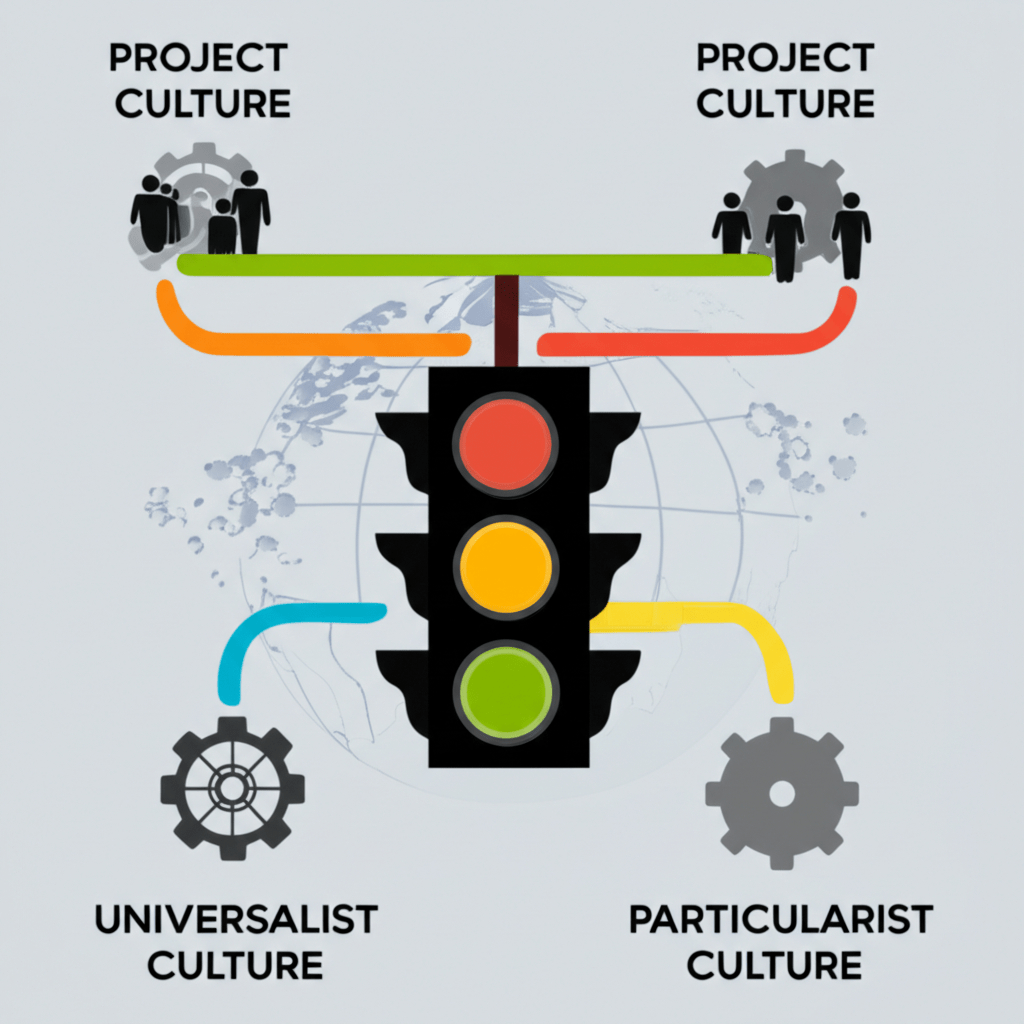
On one hand, we have universalist cultures, where rules and laws are applied uniformly to everyone. This “one size fits all” approach is straightforward and predictable. On the other hand, particularist cultures adapt the application of rules based on the context of the situation, allowing for flexibility and discretion.
Both approaches aim for fairness, yet the definition of fairness itself varies. In many Western cultures, fairness is often equated with treating everyone the same. However, in other cultures, fairness is seen as context-dependent, where the circumstances dictate the application of rules.
Consider this scenario often used to explore personal and cultural values: Imagine a close friend or family member has broken the law, resulting in harm to someone else, and you are the main witness. Would you uphold the law, potentially leading to punishment for your friend or family member, or would you stand by them? Would your decision change based on the specifics of the situation?
This distinction between universalist and particularist cultures can have significant implications in business, especially for project managers working in multinational environments. For instance, a company might develop a successful employee reward system in one location and decide to implement it globally. However, this approach will only succeed if all locations share the same concept of fairness. Otherwise, the system might be perceived as unfair and could even backfire in offices where cultural norms differ.
So, how can project managers navigate these cultural differences, especially when working in a new country or with a diverse team? First, assess your own cultural preferences. Then, evaluate where your colleagues or stakeholders fall on the universalist-particularist spectrum. Observe whether rules and policies are prominently followed or not. Like waiting for the green light to cross the street. These observations can provide insights into the cultural context.
If there is a gap between your preferences and those of others, adapting your behaviour and actions to align with local expectations is crucial. This can be challenging, as cultural norms often influence our perceptions of right and wrong, good and bad. It’s essential to set aside personal judgments and understand that these concepts are relative rather than absolute.
 coaching-vision.com